Seven Diwali offers safe on thin margins
Diwali falls on Sunday, 8 November in 2026, and Dhanteras lands two days earlier on Friday the 6th.[1] That gives you a Friday to Sunday run of the busiest days, and the weeks before matter as much as the weekend itself. I wrote seven offers for this season into the Diwali Offer Guide for store owners. This post goes through them one at a time and says what each does to your margin.
One rule sits under all seven. In India you can't sell a packaged product above its printed MRP.[2] Price can only move down. So the offers that work for a small store are the ones that get a customer to buy more, or buy a set, without cutting the shelf price on your thinnest lines.
1. The festive hamper
A ready-made gift box at a round price. In the guide I suggest three sizes: Rs 501, Rs 751 and Rs 1,101. Price each one at or just under what the items cost separately. The customer pays for the fact that somebody already put it together.
Dry fruit, sweets and namkeen make a good base. A pooja kit works too: diyas, wicks, oil, agarbatti, roli and chawal. Sweets tend to carry thin margins while dry fruit and packaging carry fatter ones, so a hamper blends the two. Keep the hamper's margin at or above your store average, and take pre-orders from about 25 October. Build one sample hamper for the counter. People buy what they can pick up.
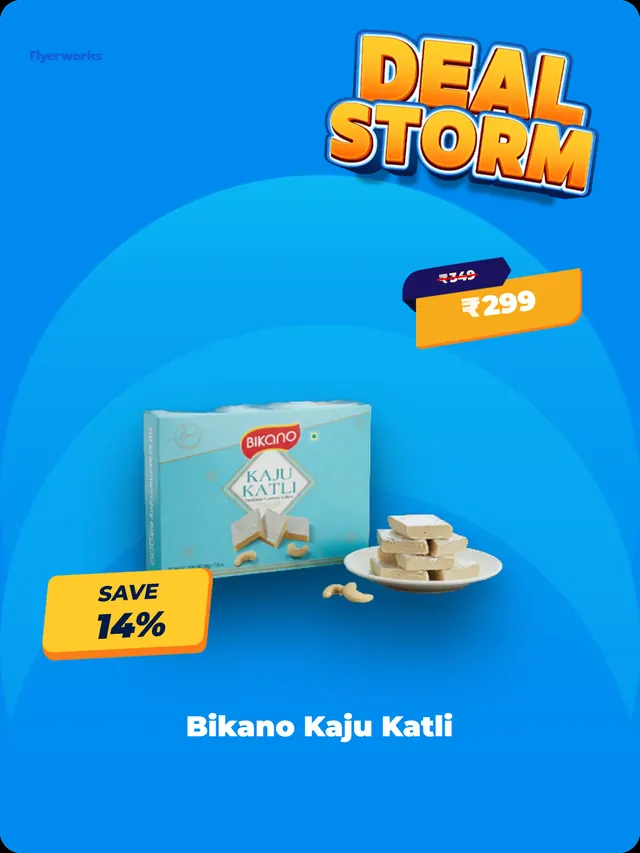
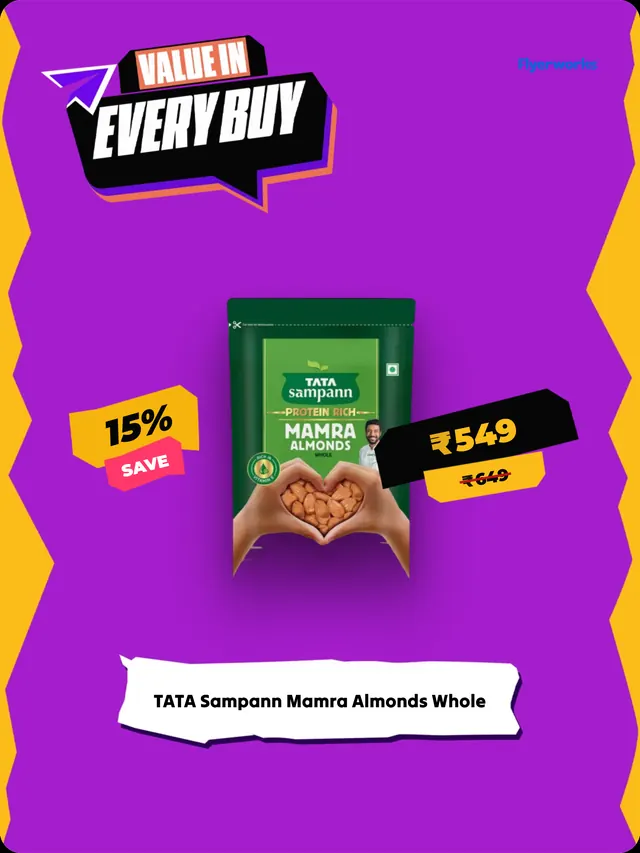
Two Diwali shelf tags made in Flyerworks, for items that go into a hamper. You can put the same offer on a tag at the till and on a WhatsApp flyer.
2. Spend-and-get
A gift when the bill crosses a set amount. Spend Rs 1,000, get a small gift. Set the amount about 15 to 20 percent above your usual bill, so customers add an item or two to reach it.
Do the sum before you print the sign. Say your margin is 12 percent and a customer adds Rs 300 to reach the gift. That extra Rs 300 earns you about Rs 36. A gift that costs Rs 40 has already lost you money on the sale. Pick a gift that costs less than the margin on the extra spend, or raise the threshold. A chocolate or a small pack of dry fruit is usually the right size.
3. Buy 2, get 1 free
Good for snacks, biscuits, chocolates, soft drinks and sweet boxes. One free unit out of three works out to 33 percent off across the set. That is a lot safer than buy 1, get 1, which gives away half of the second unit.
Run it only on lines where your margin is well above a third, or where the supplier pays for the free unit. On atta or oil it will hurt.
4. One sharp-price item
Pick one item people compare prices on, like a well-known oil or sugar. Price it at or just above your cost, cap it at 2 per family, and limit it to one weekend. The rest of the basket has to carry your margin, which is why the cap matters.
The economists Zhijun Chen and Patrick Rey describe below-cost pricing as something large retailers use against smaller rivals with narrower ranges.[3] I wouldn't copy it. A small store that sells atta below cost mostly attracts people who only buy the atta.
5. Occasion bundles
Items people need together, at one round price. A sweets-making kit of besan, ghee, sugar, dry fruit and foil boxes. A tea-time combo of tea, biscuits and namkeen. I keep the discount small or leave it out. The bundle is the convenience. Pair a thin-margin staple with add-ons that earn more, and put the set at the end of a shelf where people walk past it.
6. The festive loyalty stamp
Shop five times this month, get a free hamper item. Start it when Navratri begins on 11 October and let people redeem after Diwali, when you'll want them coming back.[4] Write the customer's mobile number on every bill you stamp. The list of numbers is the real prize, because you can message them all year.
7. The flash offer
Next three hours only, or till 8 pm today, on one item. It works best for things that spoil: bakery items near closing time, ripe fruit. Don't do it every week. Customers learn quickly, and then they wait for the deal.
Where Flyerworks fits, and where it doesn't
Flyerworks makes the flyer and the shelf tag for each of these offers. It can't work out your margin or tell you which line to discount. Those are your numbers.
Shelf tags need a paid plan: Starter includes 5 a month, and Pro and Business are unlimited. You can try the shelf tag editor free before you decide. The flyer and tag editors work best on a computer. A phone browser works for quick changes, with fewer features. There is a Diwali flyer maker if you'd rather start from a festive template.
If you run a pharmacy, put these offers on non-medicine lines only. The Drugs and Magic Remedies (Objectionable Advertisements) Act, 1954 bars advertising drugs for a list of serious conditions and a few other uses.[5]
The full Diwali Offer Guide has a 30-day calendar and 66 ideas across 8 store types. It's free with a Flyerworks account, and you can read the first nine pages now.
Sources
- Drik Panchang, Diwali Puja Calendar, accessed 2026-09-29
- Legal Metrology (Packaged Commodities) Rules, 2011, Rule 18(2), as quoted in the TaxGuru FAQ, accessed 2026-09-29
- Chen and Rey (2012), Loss Leading as an Exploitative Practice, American Economic Review 102(7), accessed 2026-09-29
- Drik Panchang, 2026 Hindu Festivals Calendar, accessed 2026-09-29
- The Drugs and Magic Remedies (Objectionable Advertisements) Act, 1954, Section 3, accessed 2026-09-29