How to price a Diwali gift hamper for profit
A hamper is the one Diwali offer where you don't discount at all. The customer pays for the work of putting it together, and you keep a margin you can actually see. That only holds if you price it properly, so this post is about the arithmetic.
Start with three prices, not thirty
In the Diwali Offer Guide I suggest three sizes: Rs 501, Rs 751 and Rs 1,101. Round numbers ending in 1 are the ones people expect on a gift. They read as an offering. Rs 751 looks like a gift and Rs 749 looks like a price.
Three tiers is enough. Fewer and you lose the customer who wants to spend a bit more. More and you spend the season repacking boxes.
What goes in
Dry fruit, sweets and namkeen make the classic box. A pooja kit is the second option: diyas, wicks, oil, agarbatti, roli and chawal. Both blend a thin-margin item with things that earn more, like dry fruit, packaging and the ribbon. That blend is why a hamper can hold a better margin than the same items sold loose.
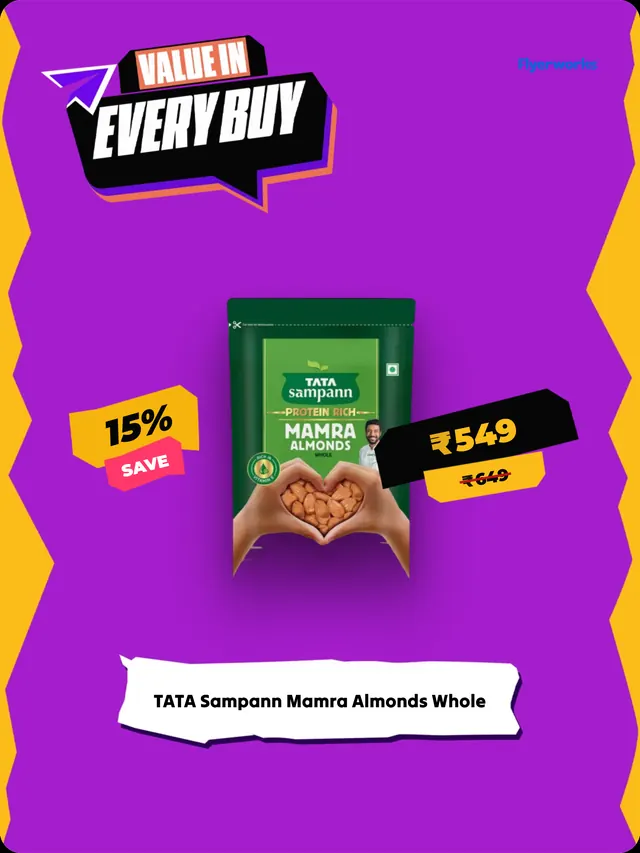

Almonds and kaju katli are two items you might pack. The tags are Diwali offer tags made in Flyerworks, the kind you'd put on the shelf where the hamper contents are sold.
Your bakery or sweet counter can make one of the boxes yourself. It sets you apart from the pre-packed gift boxes on the shelf next to it.
Price it in four steps
- Add up what the contents cost you, not what they sell for. Include the box, the wrapping and the ribbon.
- Add up what those same items would sell for separately.
- Set the hamper price at or just under that second number, then round it to one of your three prices.
- Work out the margin: (hamper price − your cost) ÷ hamper price.
Here's an example with made-up numbers. Say the contents and box cost you Rs 560 for the Rs 751 hamper. Your margin is (751 − 560) ÷ 751, which is about 25 percent. Compare that number with your store average. If it comes out below, change what's inside before you change the price.
Any packaged item in the box keeps its MRP, and the hamper shouldn't push a packed item above it.[1] If you're unsure how that rule treats a box you've assembled yourself, ask your local Legal Metrology office before you print.
Selling it
Take pre-orders from about 25 October, with a photo on WhatsApp and the price in the message. The peak is Dhanteras on Friday, 6 November through Diwali on Sunday, 8 November.[2] Build one finished hamper for the counter, because people buy the one they can pick up. Put the hamper prices on a sign near the till and at the front window.
Don't send more than one hamper message a day to your list.
Where Flyerworks fits, and where it doesn't
Flyerworks makes the flyer for your hamper offer and the shelf tags for the sign near the till: pick a Diwali design, add the hamper name and price, download the image, share it on WhatsApp or print it. It won't work out what your hamper costs, or tell you what's worth putting inside. That part is your bill and your judgement.
Shelf tags need a paid plan: Starter includes 5 a month, and Pro and Business are unlimited. You can try the shelf tag editor free. Both editors work best on a computer.
The Diwali Offer Guide has a hamper page, a 30-day calendar and ideas by store type. It's free with a Flyerworks account, and the first nine pages are open on the site. To see all seven offers side by side, read seven Diwali offers for a retail store.
Sources
- Legal Metrology (Packaged Commodities) Rules, 2011, Rule 18(2), as quoted in the TaxGuru FAQ, accessed 2026-09-29
- Drik Panchang, Diwali Puja Calendar, accessed 2026-09-29